

• Home
  • Daily Devotional
    • Daily Devotional
  • Daily Reflections
    • Daily Reflections
  • Couples Devotional
    • Couples Devotional
  • God Names Devotional
    • God Names Devotional
  • Thoughts
    • Thoughts
  • Sermons
    • Christian Sermons
  • Bible
    • Bible
  • Things of the Bible
    • Things of the Bible
  • Bible Verses
    • Things of the Bible
  • Bible Dictionary
    • Bible Dictionary
  • Prayer
    • Prayer
  • Daily Prayer
    • Daily Prayer
  • Women
    • Christian Women
  • Christian Books
    • Christian Books
  • Quotes
    • Quotes
  • Biographies
    • Biographies
  • Christian Life
    • Christian Life
ourdailydevotional logo
christian devotional
  • Home
    • Home
  • Sermons
    • Christian Sermons
  • Devotional
    • Daily Devotional
    • Couples Devotional
    • God Names Devotional
    • Thoughts
  • Reflections
    • Christian Reflections
  • Prayer
    • Prayer
    • Daily Prayer
  • Women
    • Christian Women
  • Bible
    • Bible
    • Bible Dictionary
    • Bible Verses
    • Things of the Bible
  • Books
    • Christian Books
    • Biography
  • Quotes
    • Christian Quotes
  • Life
    • Christian Life


Meaning of GRAPEVINE

This term generally designates the true vine ("Vitis vinifera"), native to Western Asia (south of the Caspian Sea) (cf. Gen. 9:20, 21). The Egyptians cultivated it (Gen. 40:9-11; Ps. 78:47).

This term generally designates the true vine ("Vitis vinifera"), native to Western Asia (south of the Caspian Sea) (cf. Gen. 9:20, 21). The Egyptians cultivated it (Gen. 40:9-11; Ps. 78:47).
There are sculptures from the Old Kingdom depicting vines, grapes and presses, as well as wine making. The land and climate of Palestine are suitable for its cultivation, which was practiced from the beginning in Canaan (Gen. 14:18).

The vine grew in the plains of Philistia, Jezreel, Gennesaret (1 Kings 21:1; Wars 3:10, 8) and prospered in the rugged regions near Hebron, Shiloh, Shechem (Num. 13:23; Judges 9 :27; 21:20; Jer. 31:5), En-gedi (Song. 1:14), Heshbon, Eleale, Sibma east of the Jordan (Is. 16:8-10; Jer. 48:32) and in Lebanon (Hos. 14.7).

There is a huge difference between good plants and wild ones (Is. 5:2; Jer. 2:21). The vineyards were frequently found either on the summits or on the slopes of the hills, sometimes descending on artificial terraces (Is. 5:1; Jl. 3:18).

It was protected with a fence or wall (Num. 22:24; Ps. 80:8-12; Pr. 24:30, 31; Song 2:15; Is. 5:5). The land was cleared of stones, a hut or tower was erected for the guardian, and a winepress was carved in the rock (Is. 1:8; 5:1-7; Mt. 21:33-41).

These ancient winepresses still exist in large numbers in Palestine. Of all
Of the cultivated plants, it is the vine that requires the most care (Mt. 20:1-16; Lev. 25:3; Pr. 24:30, 31; Is. 5:6; Jn. 15.2).

The vine was allowed to spread over the ground, only lifting up the fruit-bearing branches (Is. 16:8; Ezek. 17:6). Sometimes the vine was made to climb trees or over and between trellises (1 Kings 4:25; Mich. 4:4).

Black grapes were particularly cultivated (Is. 63:2; Rev. 14:19-20). In privileged places, ripening ended before the month of August. Grapes were consumed fresh or raisins (Num. 6:3; Deut. 23:24); A highly appreciated element of food, it was also preserved in the form of cakes (1 Sam. 25:18; 1 Chron. 16:3).

Its juice was drunk fresh or fermented (see WINE). The harvests began in mid-September and continued until October, in the midst of a festive atmosphere. The grapes were trampled in the winepress to obtain the wine (Judg. 9:27; Is. 16:10; Jer, 25:30; 48:33).

Israel is likened to a vine (Ps. 80:8-13). In Isaiah 5 it is likened to a vineyard. God laid it out on a fertile hillside, planting it with the choicest vines, and doing everything possible for its protection and yield.

But when fruit was sought from it, it turned out that it only produced wild grapes. Finally, God removed its fence, abandoning it to the elements and to be trampled by all; a prophetic image of Israel in its state of apostasy.

The Lord Jesus, just as he became the true Servant of Jehovah where Israel had failed (see SERVANT OF JEHOVAH), also became the true vine; His disciples become the branches. There can be no true fruit in your lives except as long as you abide in Him (John 15:1-5).


This Christmas season, let’s remember to thank Him for His most precious gift to us: Himself.

DAILY DEVOTIONAL

The Gift of Himself

David Jeremiah
Long ago, there ruled a wise and good king in Persia who loved his people and often dressed in the clothes of a working man or a beggar so he could visit the poor and learn about their hardships.
Father, as we honor the birth of your Son, let us think on mercy, healing, and reconciliation. Amen.

DAILY DEVOTIONAL

Healing Time

J. Stephen Lang
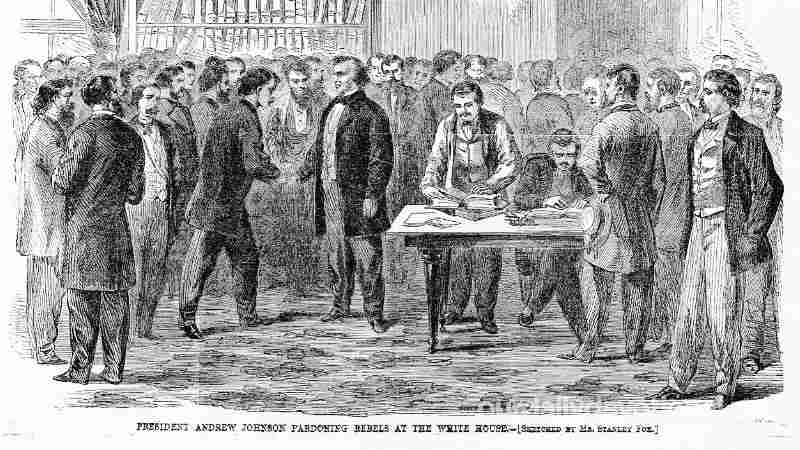
1868: On this date a political leader who grew up poor, had no formal education and was illiterate until his wife taught him to read and write, issued Proclamation 179 “granting full pardon and amnesty for the offense of treason against the United States during the late Civil War.”
Christmas means you have an eternal home waiting for you. That should make more than the angels sing!

DAILY DEVOTIONAL

A Personal Promise

Charles Stanley
Jesus came to earth with the view of offering you salvation. He wanted you to have a restored relationship with the Father, a relationship that was so close, so intimate, that you would have your special place in the Father’s house (John 14:1–4).
The only people in Israel who did recognize Christ at His birth were humble, unremarkable people.

DAILY DEVOTIONAL

The Unexpected Savior

John MacArthur
Scripture records that when John the Baptist began his ministry, “The people were in expectation, and all reasoned in their hearts about John, whether he was the Christ or not” (Luke 3:15).
In the incarnation, God spanned the vast chasm of fear that had distanced him from his human creation

DAILY DEVOTIONAL

Reflections on the Incarnation and Freedom of God

Philip Yancey
Think of the condescension involved: the incarnation, which sliced history into two parts had more animal than human witnesses. Think, too, of the risk. In the incarnation, God spanned the vast chasm of fear that had distanced him from his human creation.
A B C D E F G H I J K L M
N O P Q R S T U V W X Y Z
Bible Dictionary

Bible Dictionary online, your comprehensive guide to understanding the rich and profound meanings behind the words and concepts found within the Holy Scriptures.


Our Daily Devotional Logo
followmeusa.net@gmail.com
OURDAILYDEVOTIONAL.NET
"We follow Jesus"
Sitemap | Sitemap | Sitemap Bible | Privacy Policy & Cookies
Follow us on Youtube